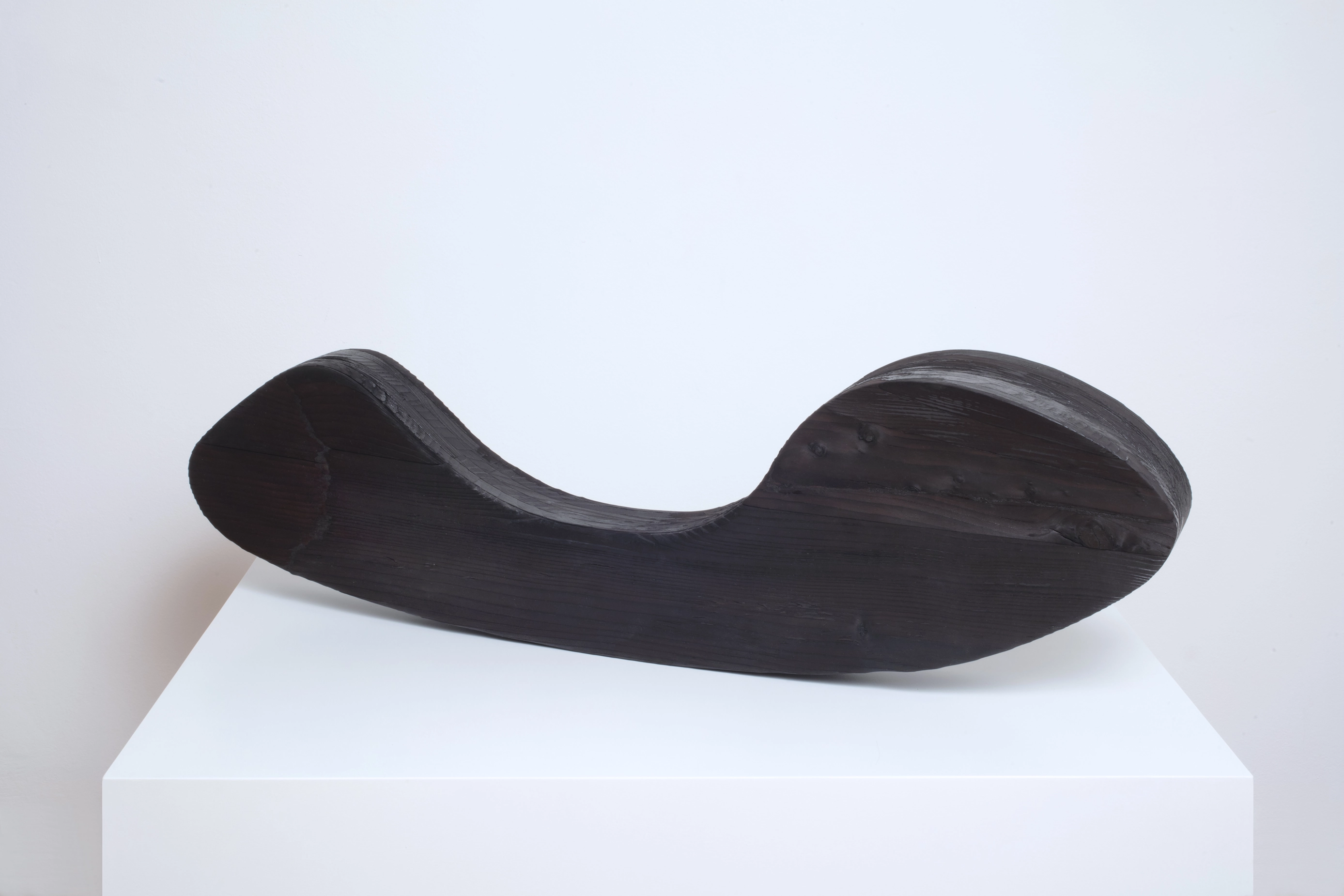
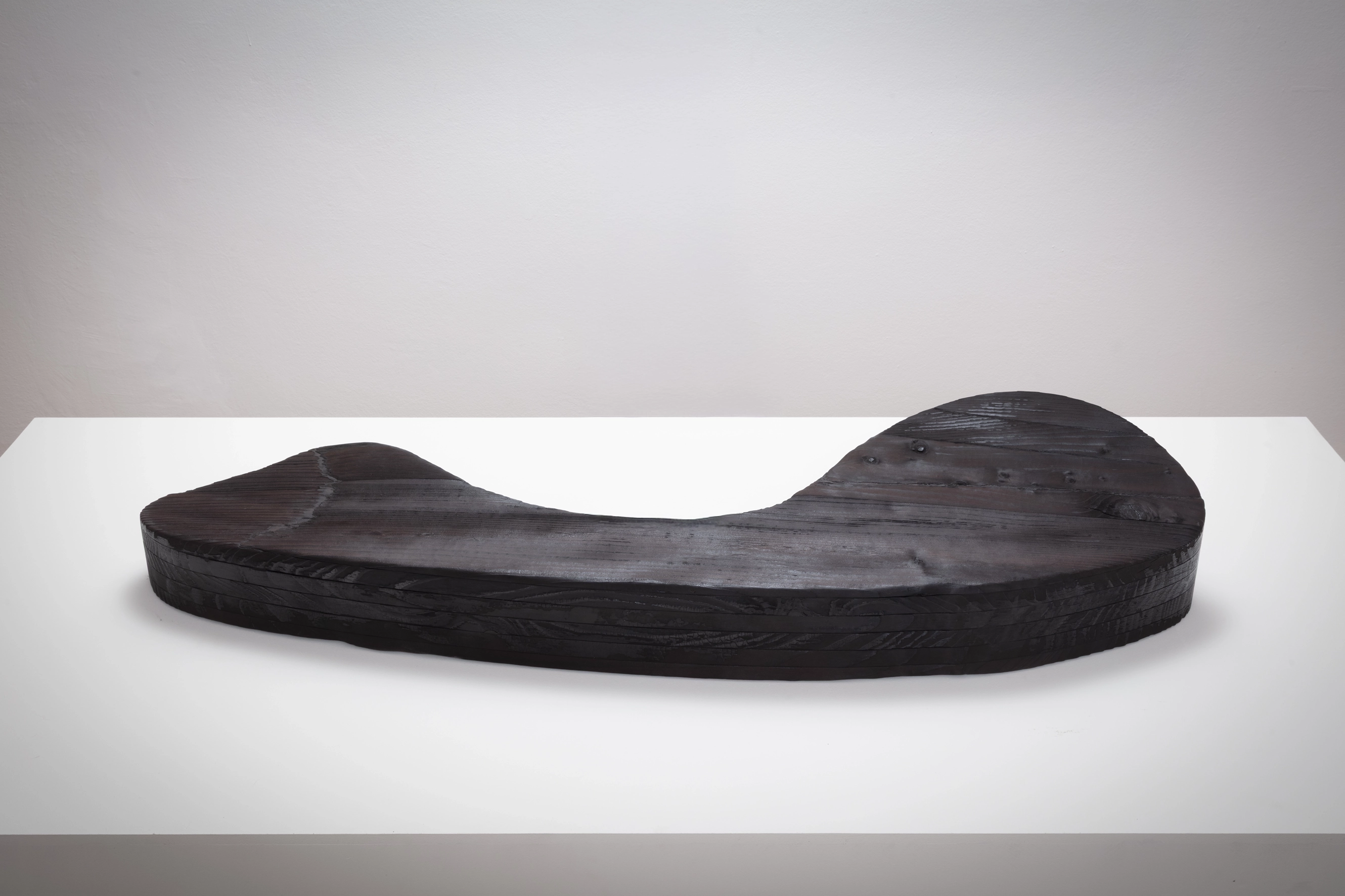
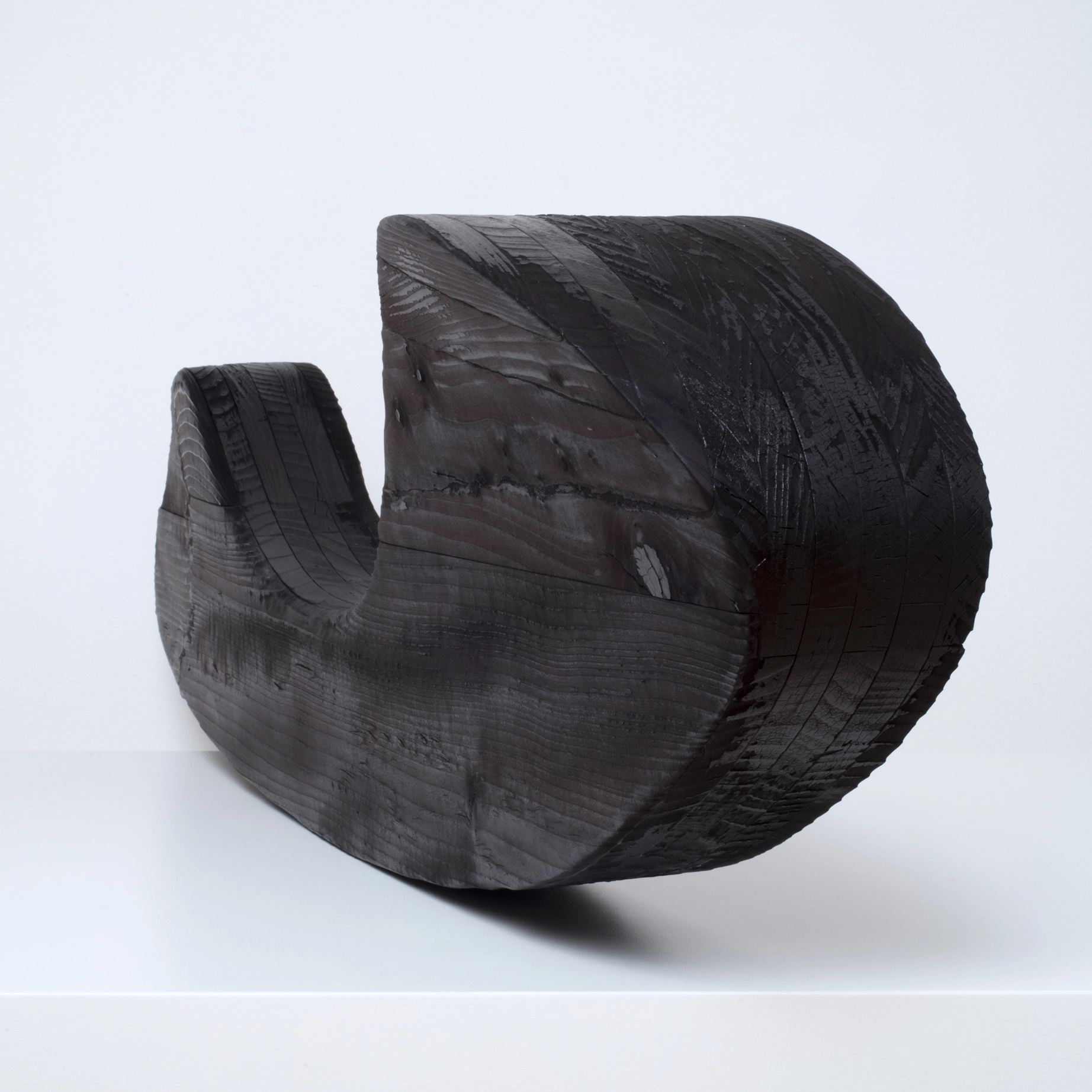
The sculpture Inhabiting Listening likewise invites a multisensory aesthetic experience
in which perception expands beyond sight to engage tactile, spatial, olfactory, and imaginative dimensions. The work exists in two material variants that, while sharing the same
formal structure, activate different perceptual modes and complementary reflections on
the relationship between matter, form, and sensoriality.
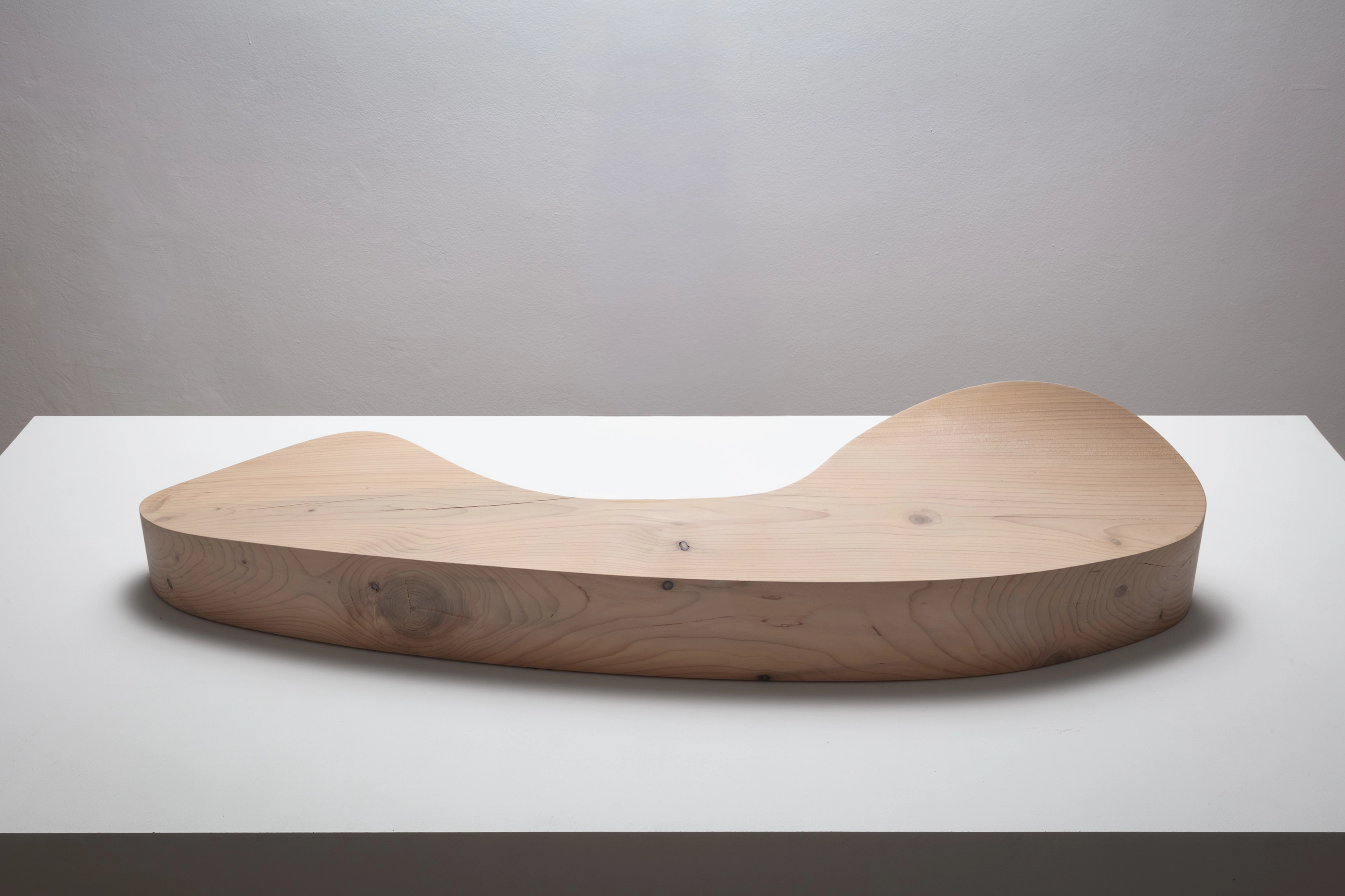
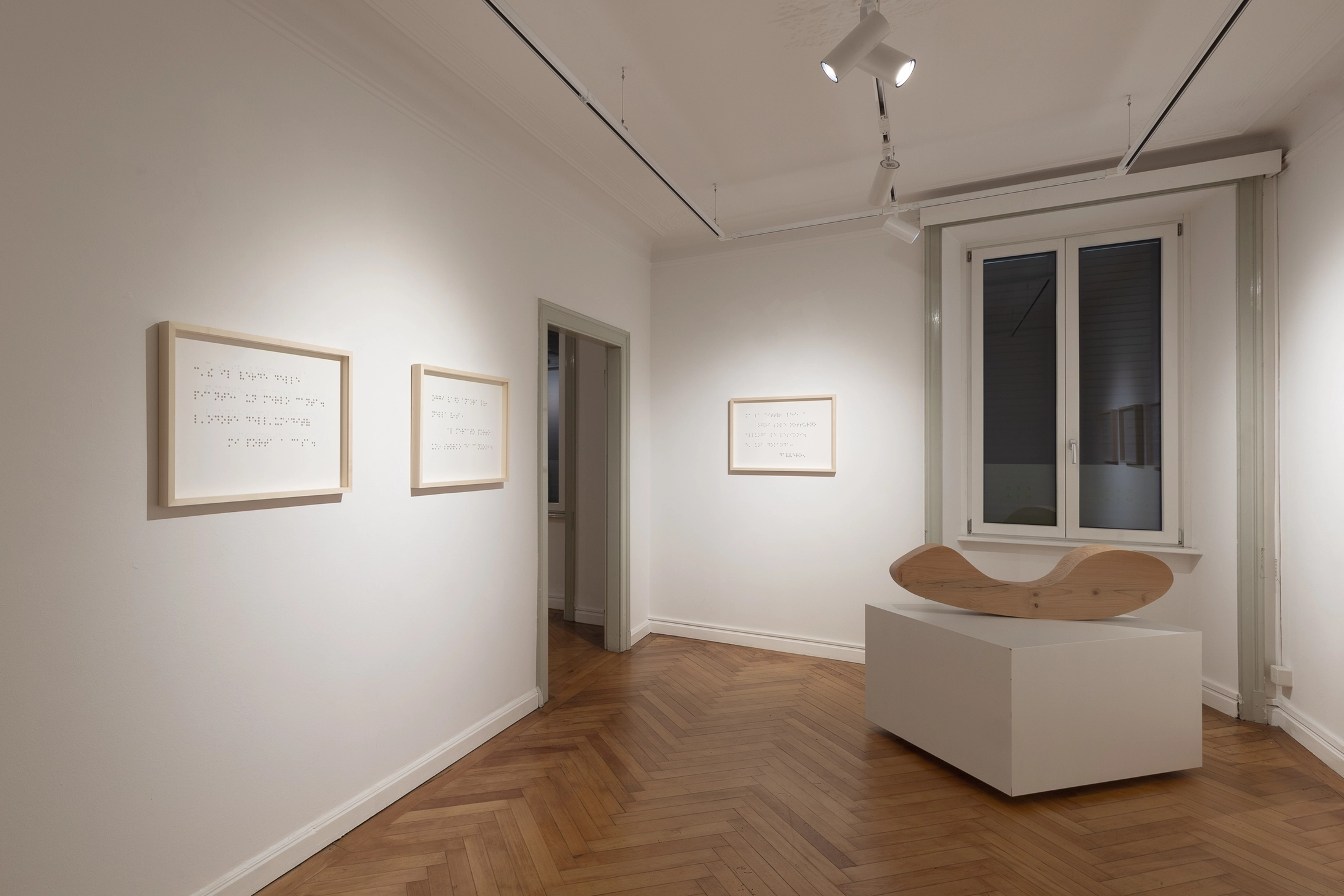
The first version, Inhabiting Listening I, is crafted from natural cedar wood, foregrounding
the material's organic and sensorial qualities and introducing an olfactory component
and a pronounced vital charge. Here the work holds a dynamic balance between minimalist formal tensions and biomorphic suggestions. While its morphology may evoke
natural structures, it never resolves into explicit figuration, instead maintaining an ambivalent, allusive quality. This formal ambiguity accentuates the work's openness: a
mutable, resonant presence that calls for attentive, unhurried, immersive viewing.
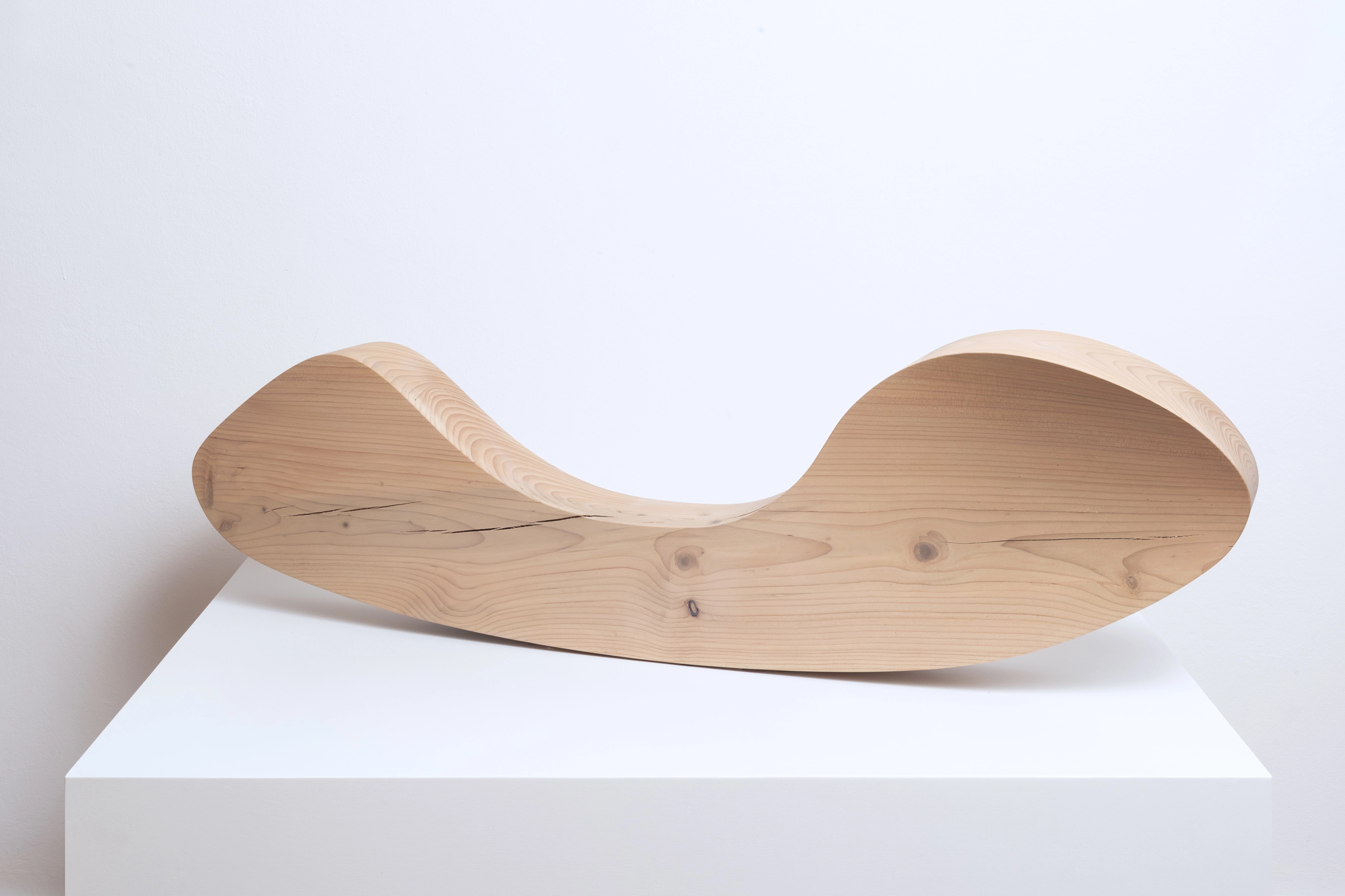
photo: Antonio Maniscalco
abitare l’ascolto 2
2025
Burnt and waxed cedar wood
120x22x33/22 cm
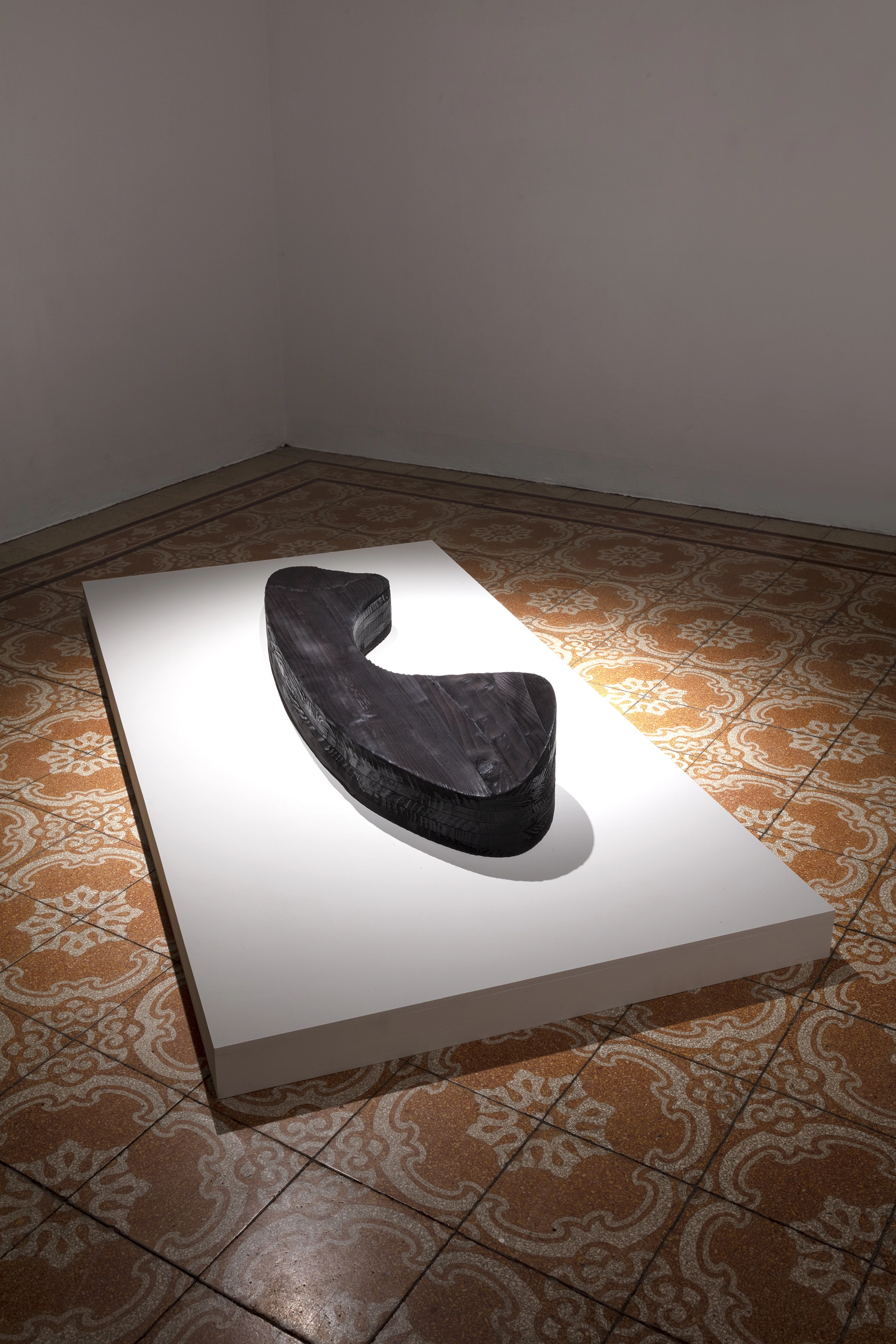
The second variant, Inhabiting Listening II, employs the Japanese technique of Shou
Sugi Ban (yakisugi), an ancient method of charring wood to preserve it and enhance the
surface aesthetically. This treatment radically transforms the matter: the carbonized,
black, deeply textured skin alters the work's sensitive perception, intensifying its visual
density and tactile complexity. Although the formal configuration remains identical to
the cedar version, the overall effect is profoundly transfigured. The new material quality
induces a different reading of the volume, evoking memory, otherness, and temporality
that transcend the sculptures physicality.
In both versions, Inhabiting Listening presents itself as a plastic organism that challenges the distinctions between object and space, form and perception. The title functions
as an interpretive device, orienting the viewer toward an idea of "inhabiting" that is not
limited to spatial presence but extends to a sensitive and receptive attitude towards the
work and the world. Listening, in this context, is not reducible to the auditory alone; it
becomes a broader perceptual stance capable of activating a deep, transformative relation with matter, form, and the void the work inhabits.